Today, I would like to share a particularly challenging cerebrovascular surgery from my recent experience at NAMS, Bir Hospital.
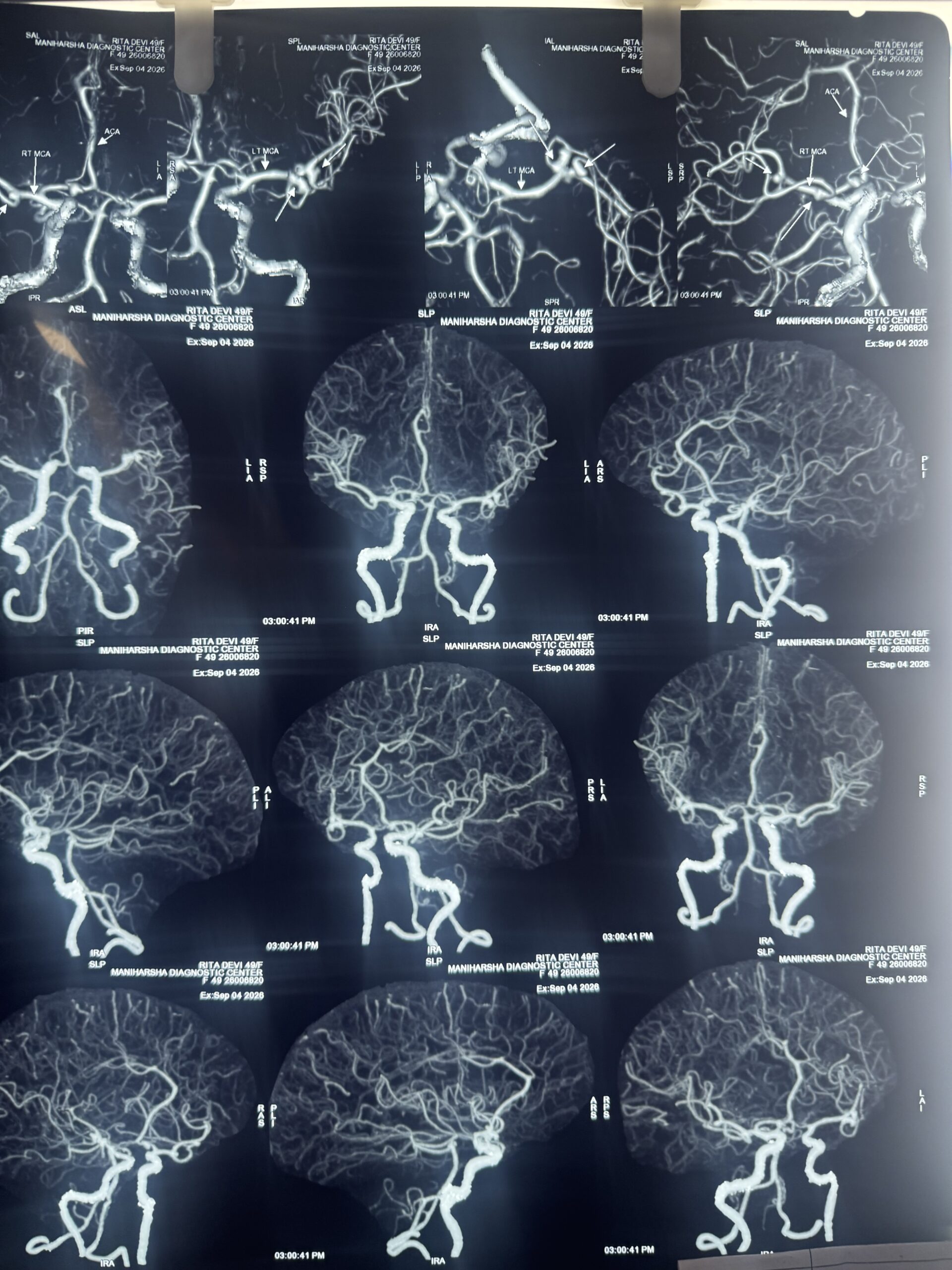
A 47-year-old woman presented with intracranial hemorrhage. Detailed imaging revealed seven cerebral aneurysms involving both sides of the brain three on the left side, two at the junction of the two major anterior cerebral arteries, and two on the right side.
Normally, aneurysms on the right side are approached from the right and those on the left from the left. In this case, however, we planned something much more challenging: to reach and clip six aneurysms on both sides through a single left-sided craniotomy.
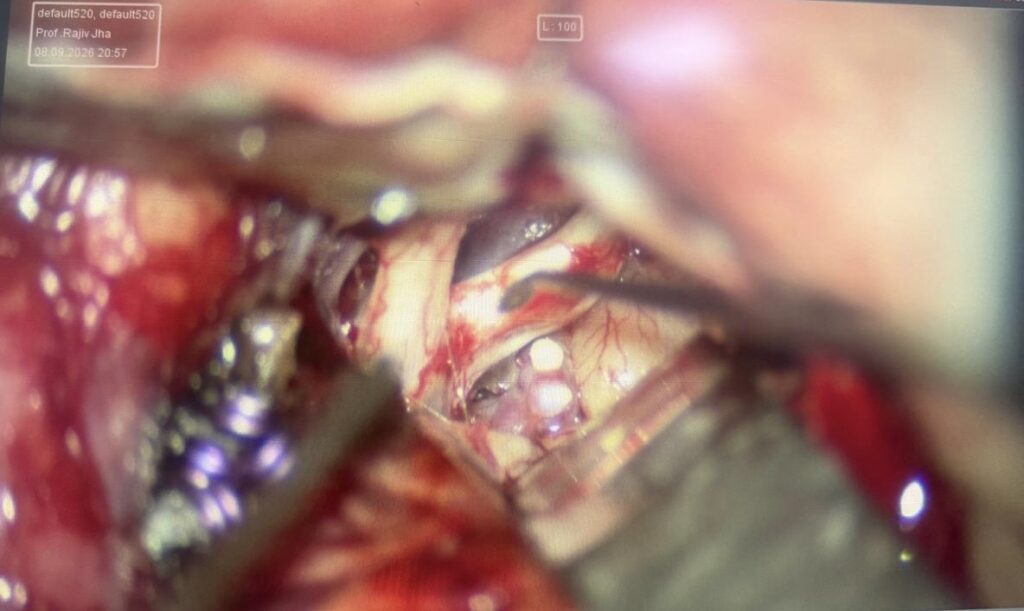
The most technically demanding part was reaching the aneurysms on the opposite, right side through the left-sided approach. This is a complex and rarely performed microsurgical technique, requiring a detailed understanding of cerebrovascular anatomy, blood flow, aneurysm location, and meticulous microsurgical skills.
After approximately seven hours of surgery, all six aneurysms were successfully clipped. The seventh aneurysm is planned for treatment by an endovascular approach.
This was not our first experience with this technique. Our team at Bir Hospital has previously successfully treated nine patients with contralateral aneurysms through a single-sided surgical approach. Each case adds to our experience, confidence, and understanding of these challenging vascular lesions.
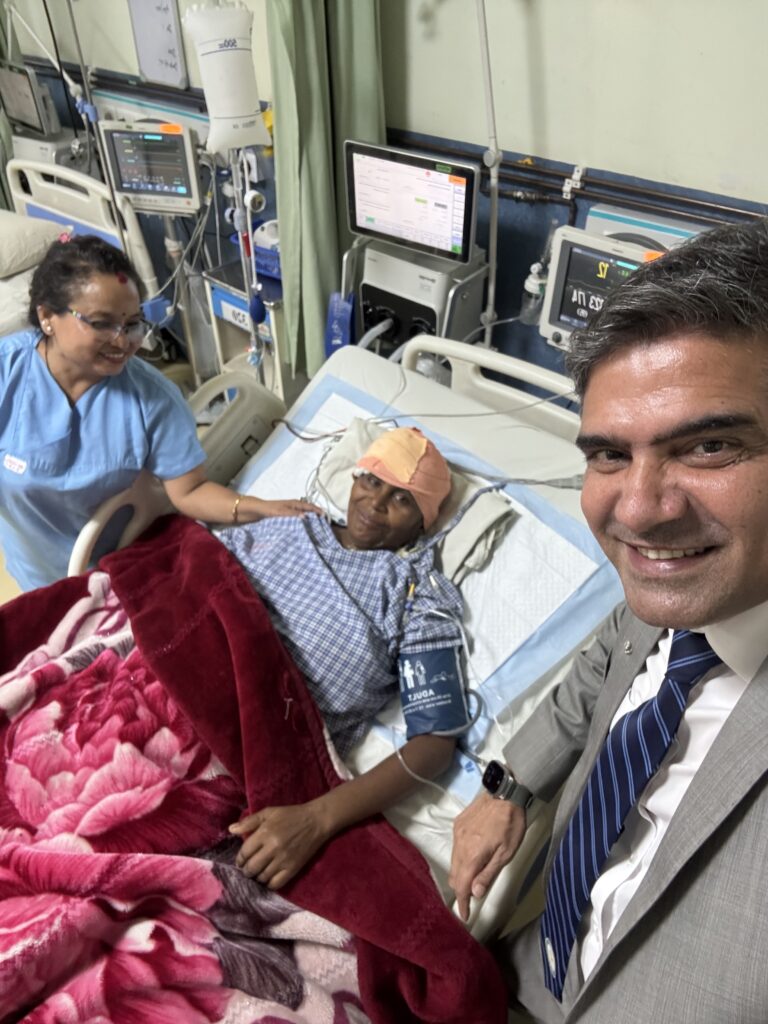
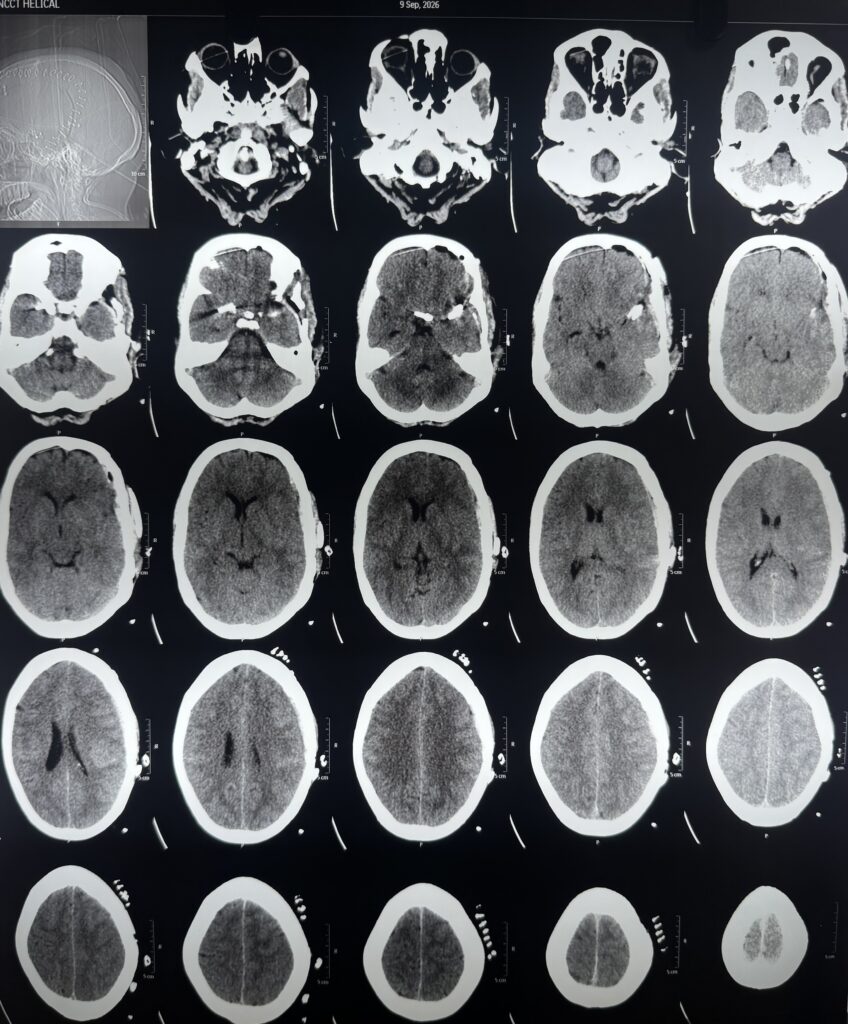
I am particularly happy to share that the patient is currently fully conscious, neurologically intact, and without any neurological deficit.
I am grateful to the entire team who worked together throughout this challenging operation:Dr. Namrata Khadka and Dr. Yogendra Devkota, the anesthesia and perioperative team, and our dedicated nursing team, Sindhu Gautam, Asmi Magar and Yazzu Manandhar.
Complex cerebrovascular surgery is never the work of one individual. It is the result of teamwork, preparation, experience, precision and trust.
For me, cases like this are not only about successfully completing a difficult operation; they are also about continuously pushing the boundaries of what we can achieve for our patients here at Bir Hospital, NAMS.
Six aneurysms. One surgical approach. Seven hours of meticulous microsurgery. One grateful heart for the entire team.